Introduction
Performance-driven design in architecture increasingly relies on
tools like generative design and building simulations, which,
despite their benefits, pose challenges such as high computational
Performance-driven design in architecture increasingly relies on
tools like generative design and building simulations, which,
despite their benefits, pose challenges such as high computational
demands and complex design spaces. Machine learning-based surrogate
models offer a faster alternative but remain inaccessible to
non-experts. This research introduces D-Predict, a prototype
integrating surrogate modeling, generative design, and interactive
visualizations to streamline design exploration. By enabling
intuitive collaboration between architects and artificial
intelligence, the framework empowers architects to efficiently
evaluate and enhance building performance, bridging the gap between
technical complexity and practical usability.
This research was made possible through a collaborative effort
between Simon Fraser University (SFU), Perkins&Will, and Mitacs. We
are grateful for SFU’s academic resources, Perkins&Will’s industry
expertise, and Mitacs’ funding support, which together advanced
innovation in computational design.
Design phase: 1
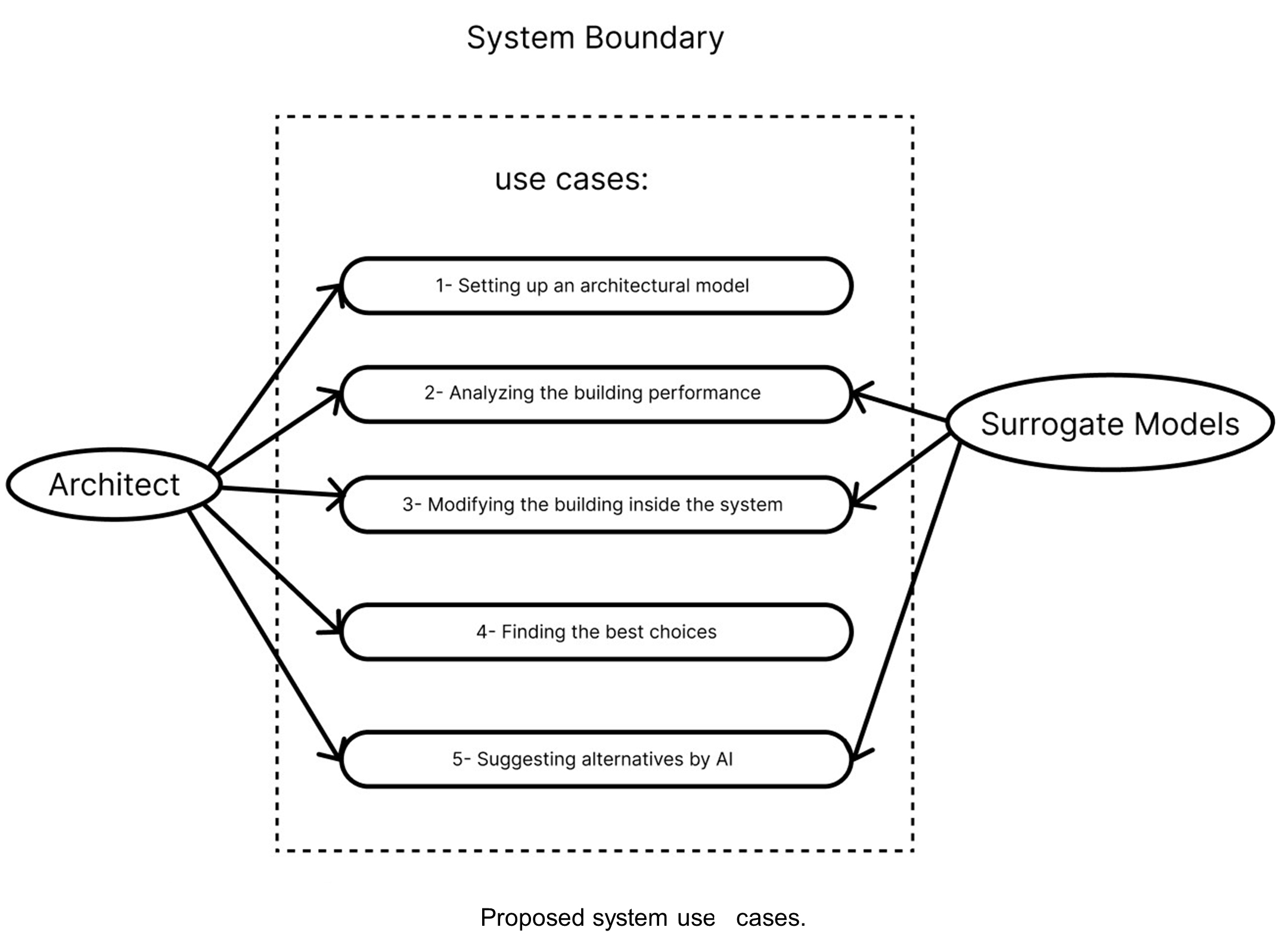
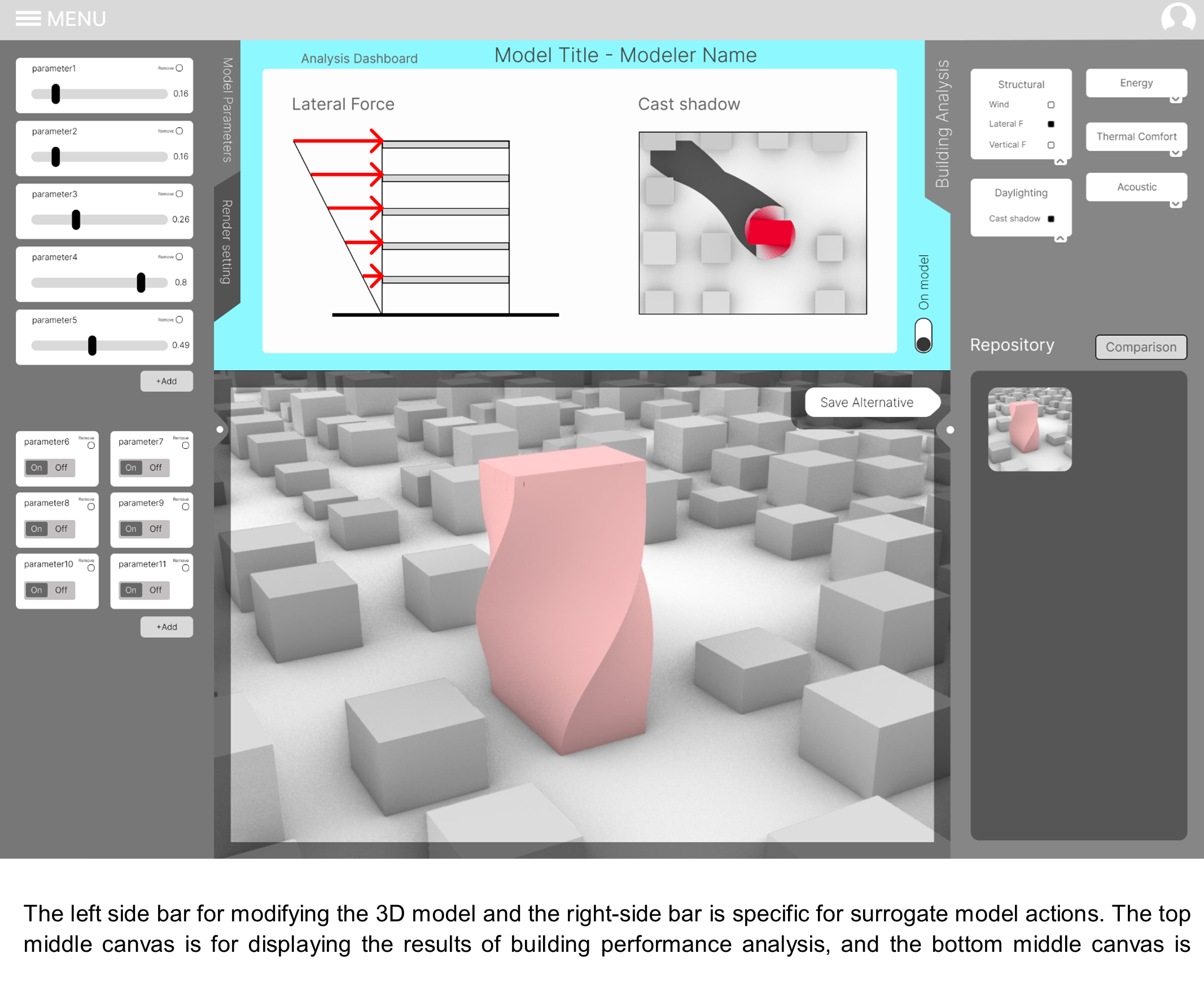
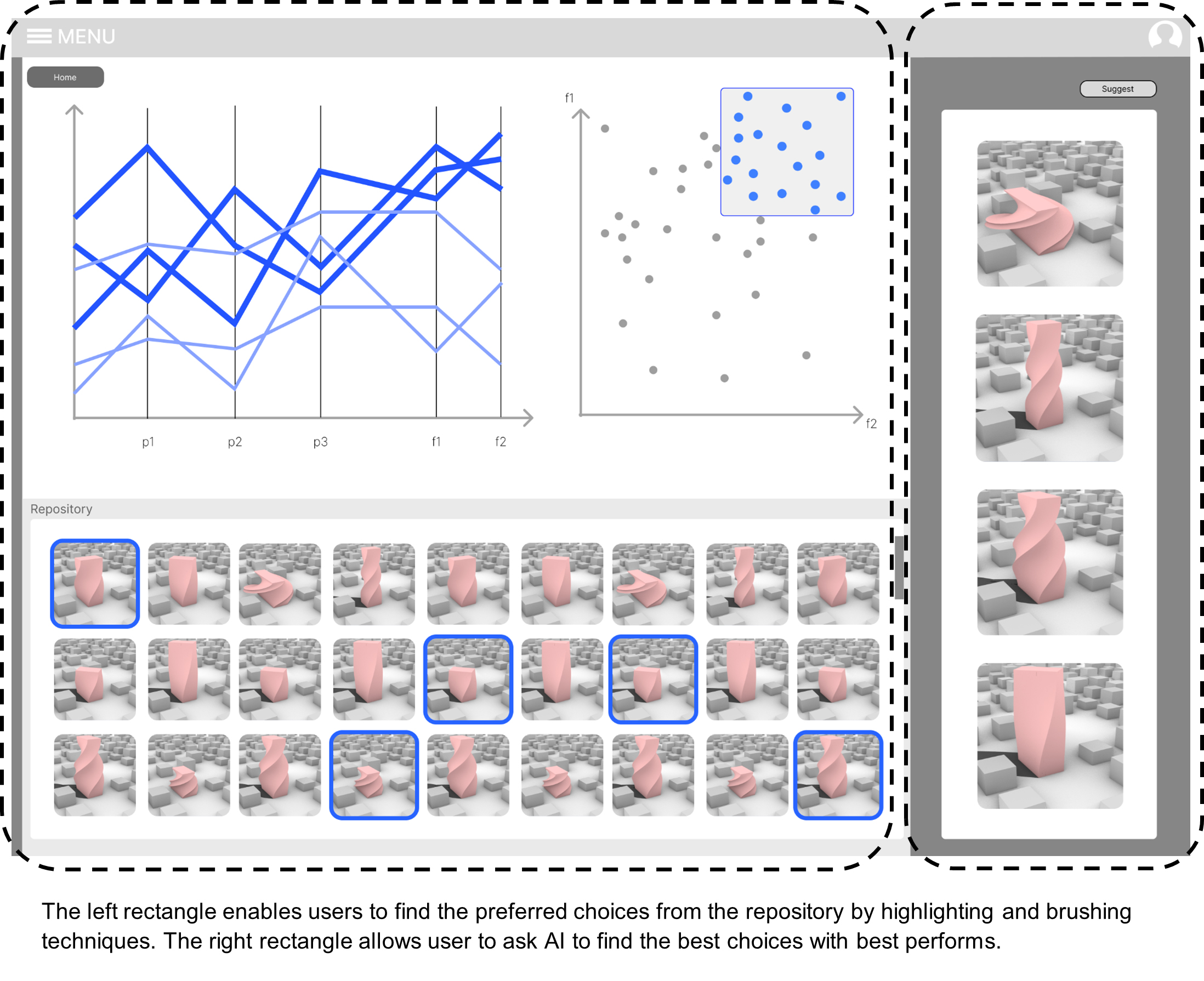
Design phase: 2
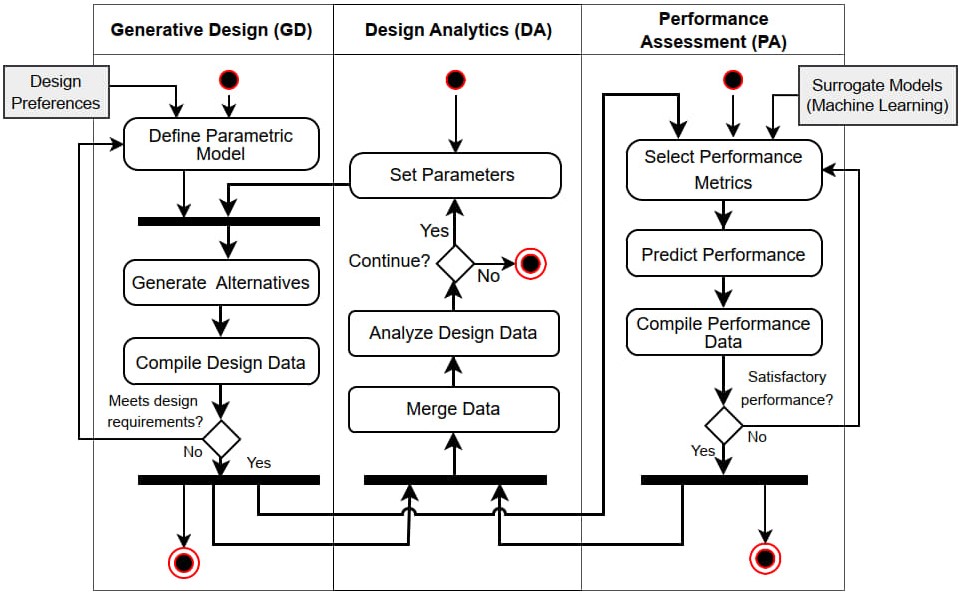
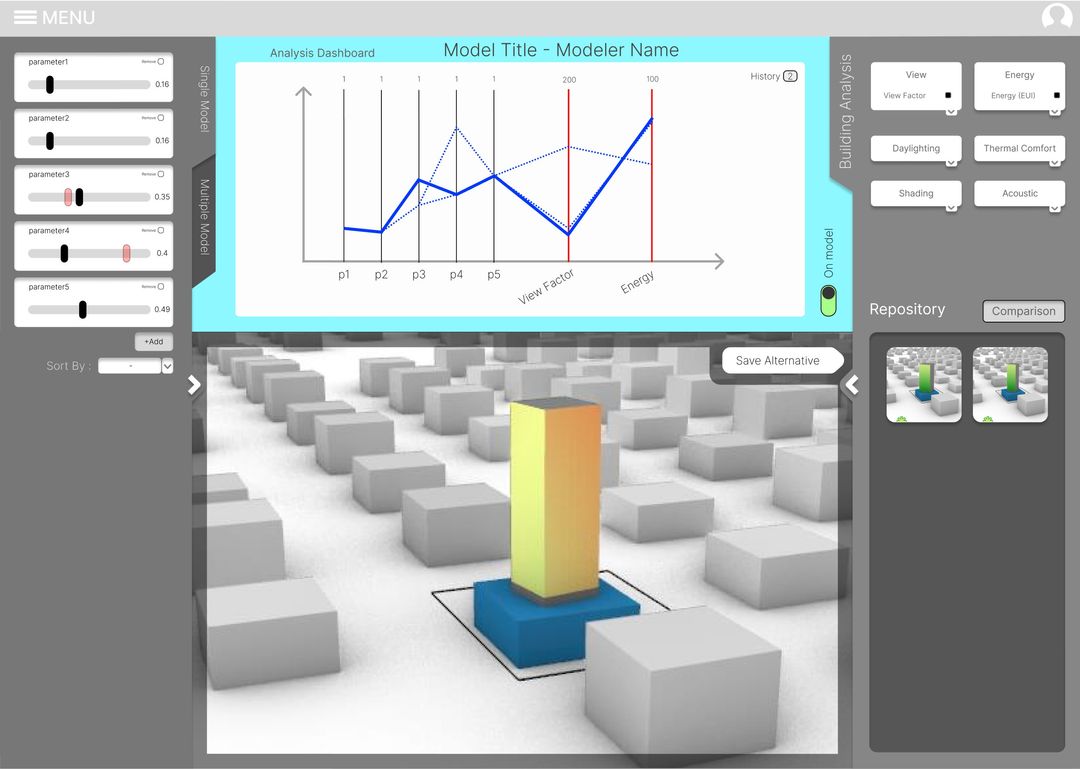
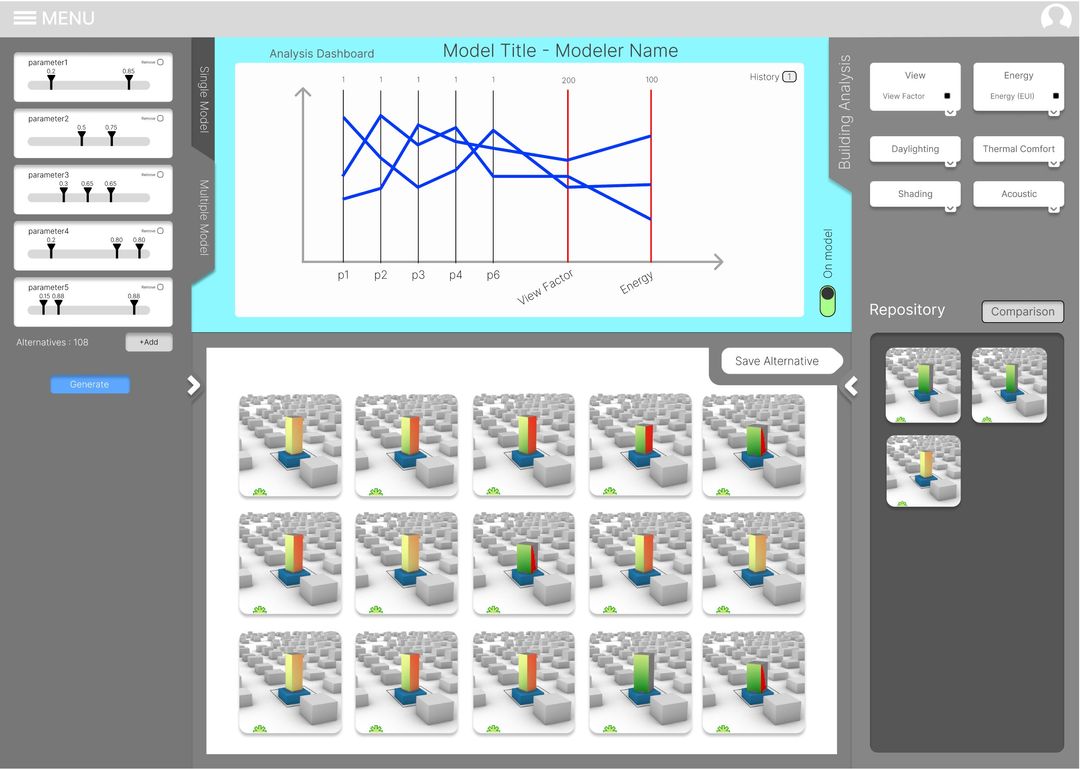
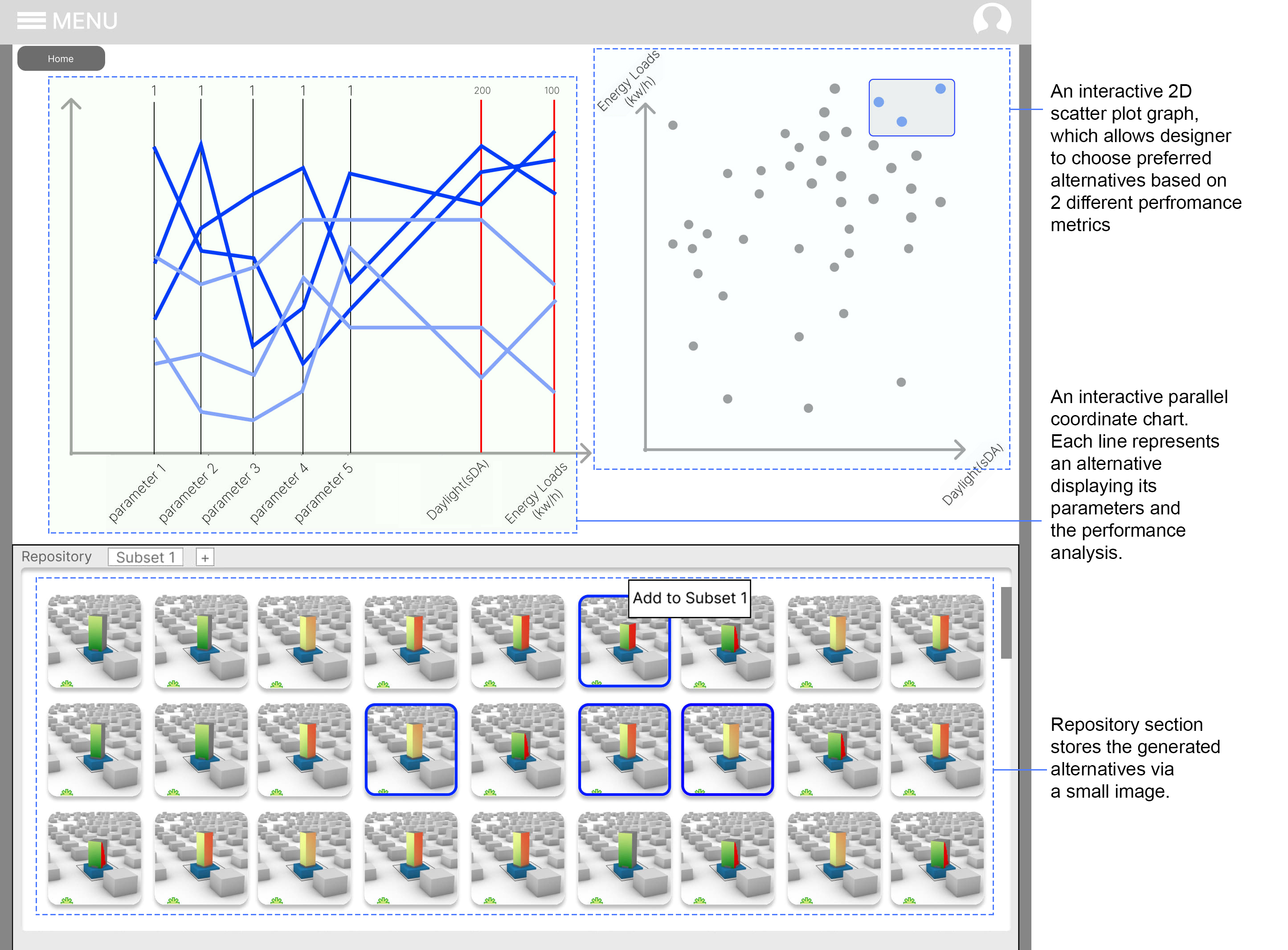
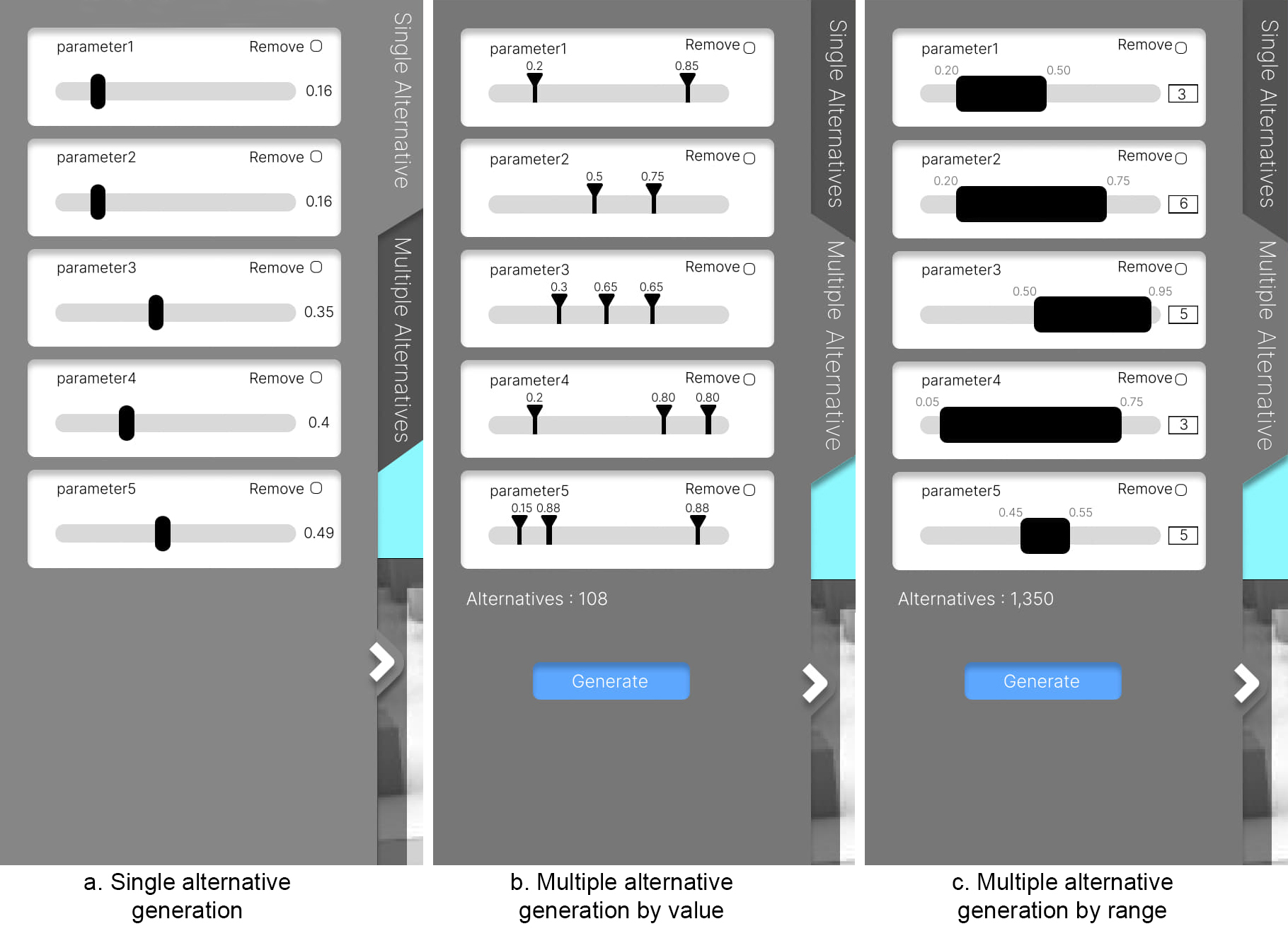
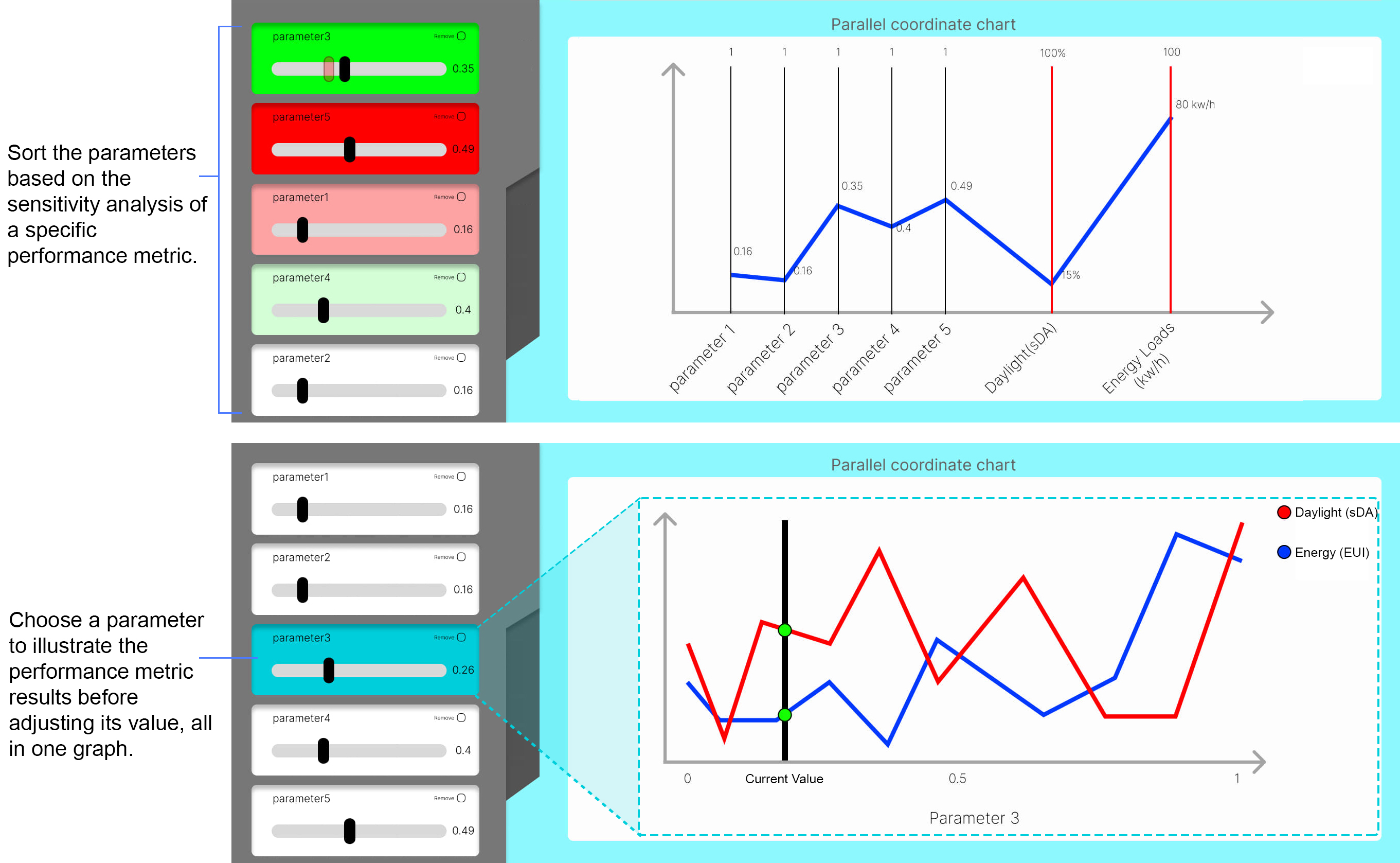
Rhino Dashboard
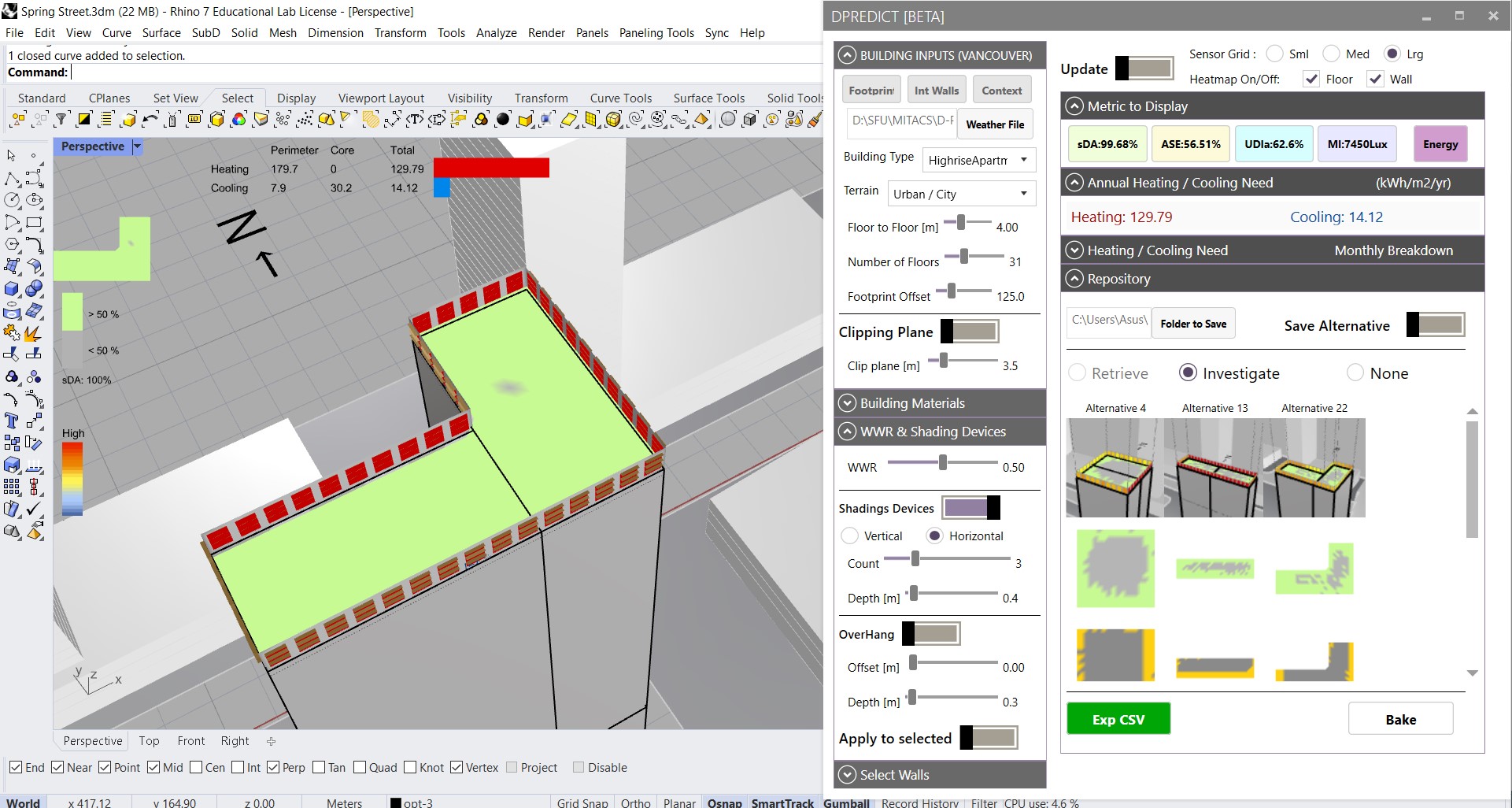
In this phase, we introduced a workflow and a Rhino dashboard that integrates generative design with machine learning-based building performance assessment. Building on the literature and design prototypes, this approach leverages interactive data visualizations to enhance design decision-making processes.
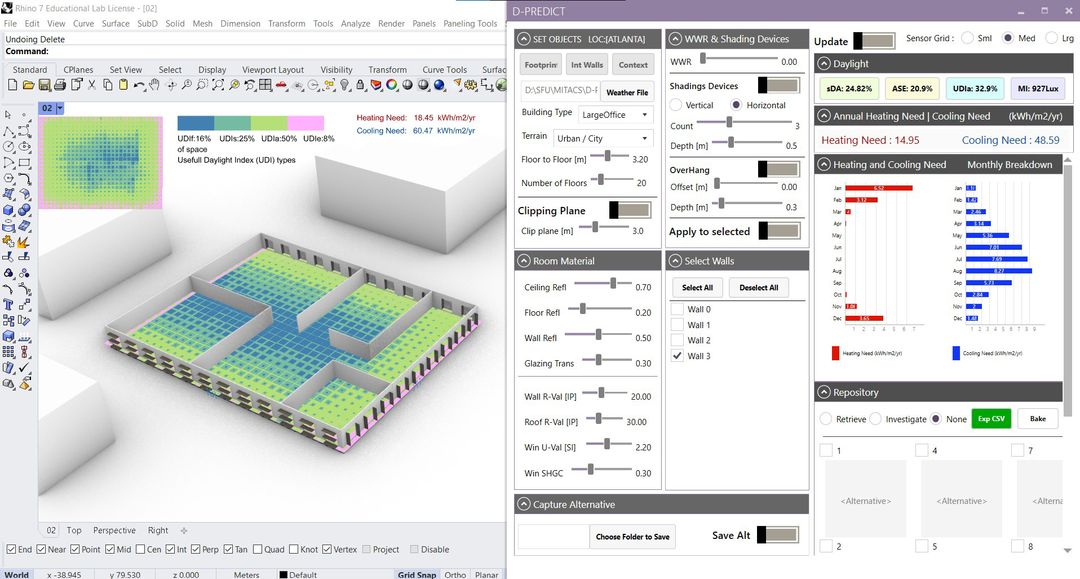
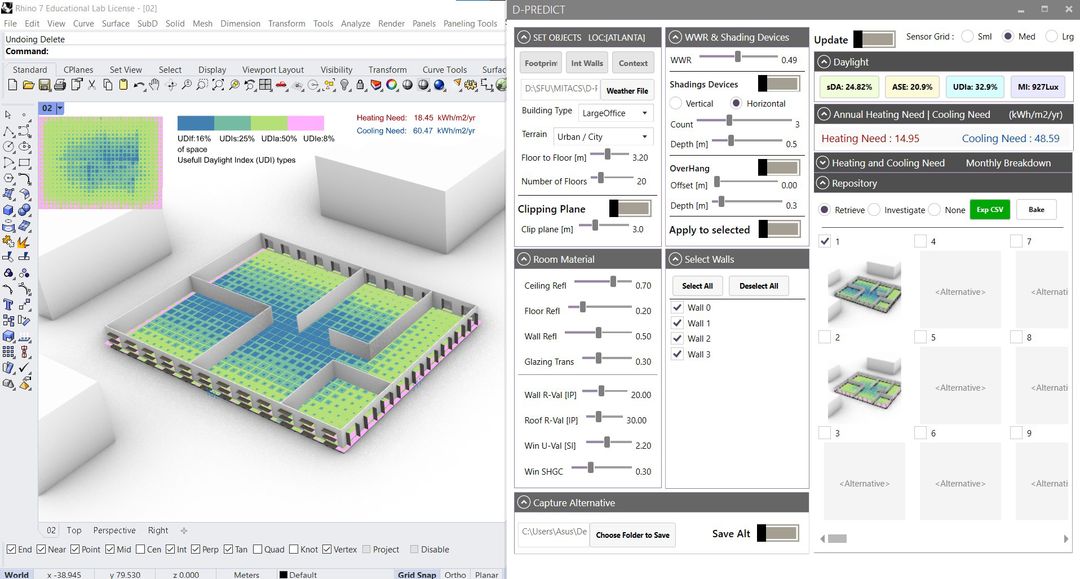
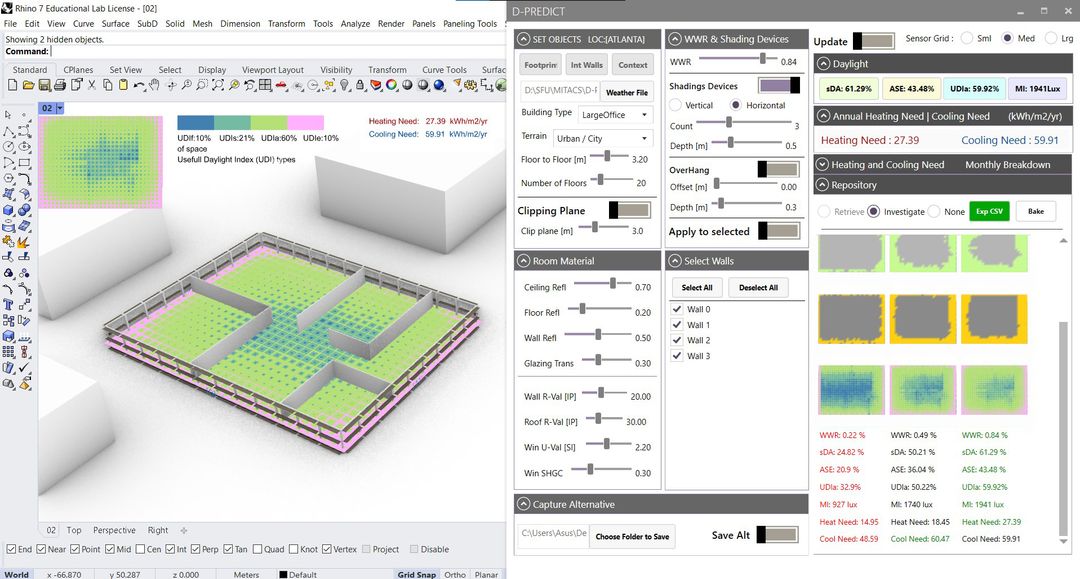
Expert Review
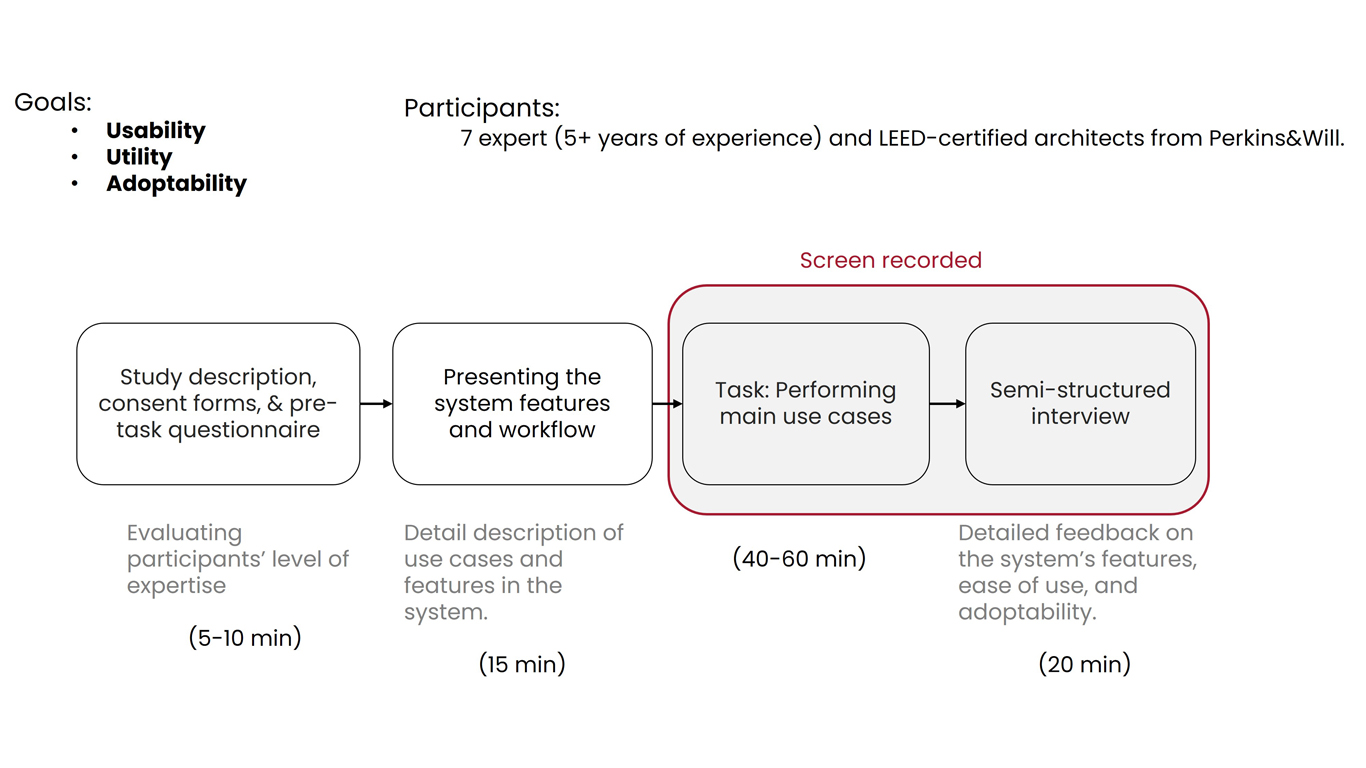
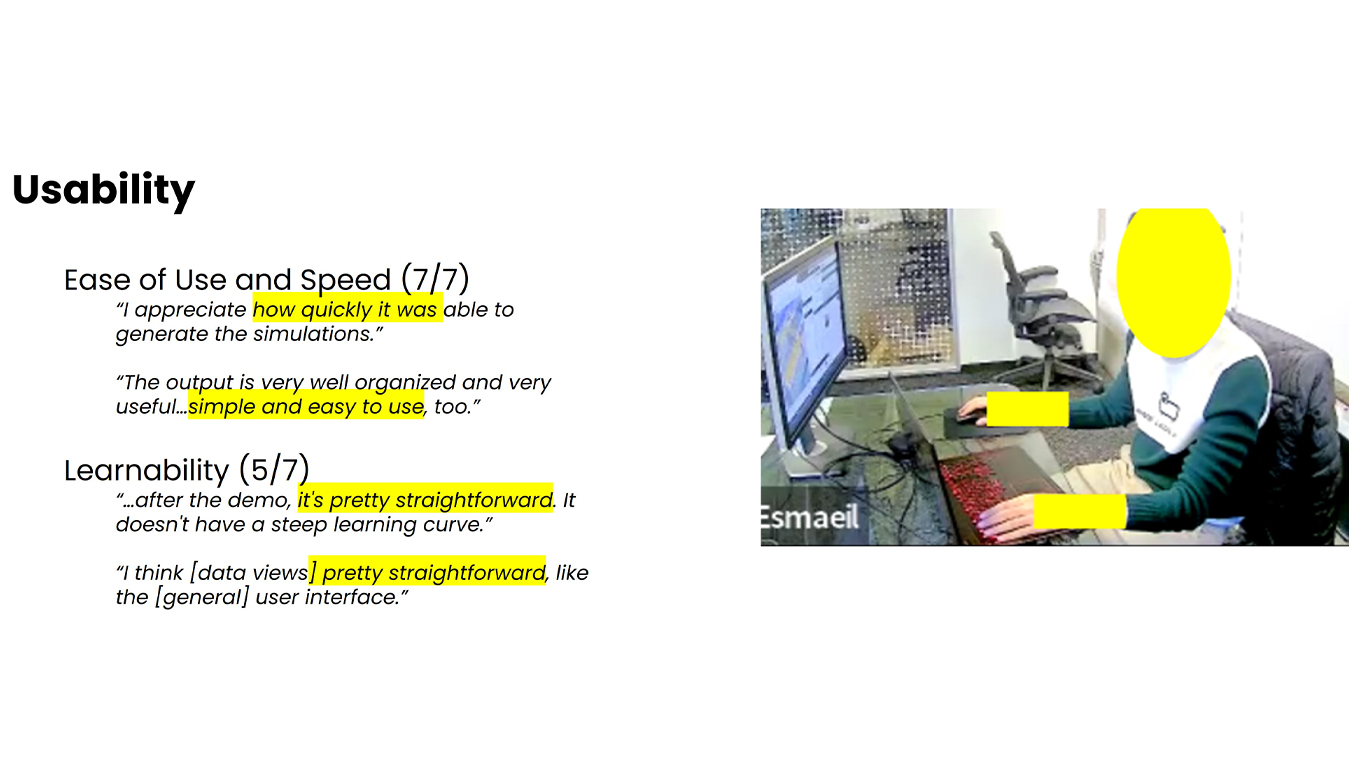
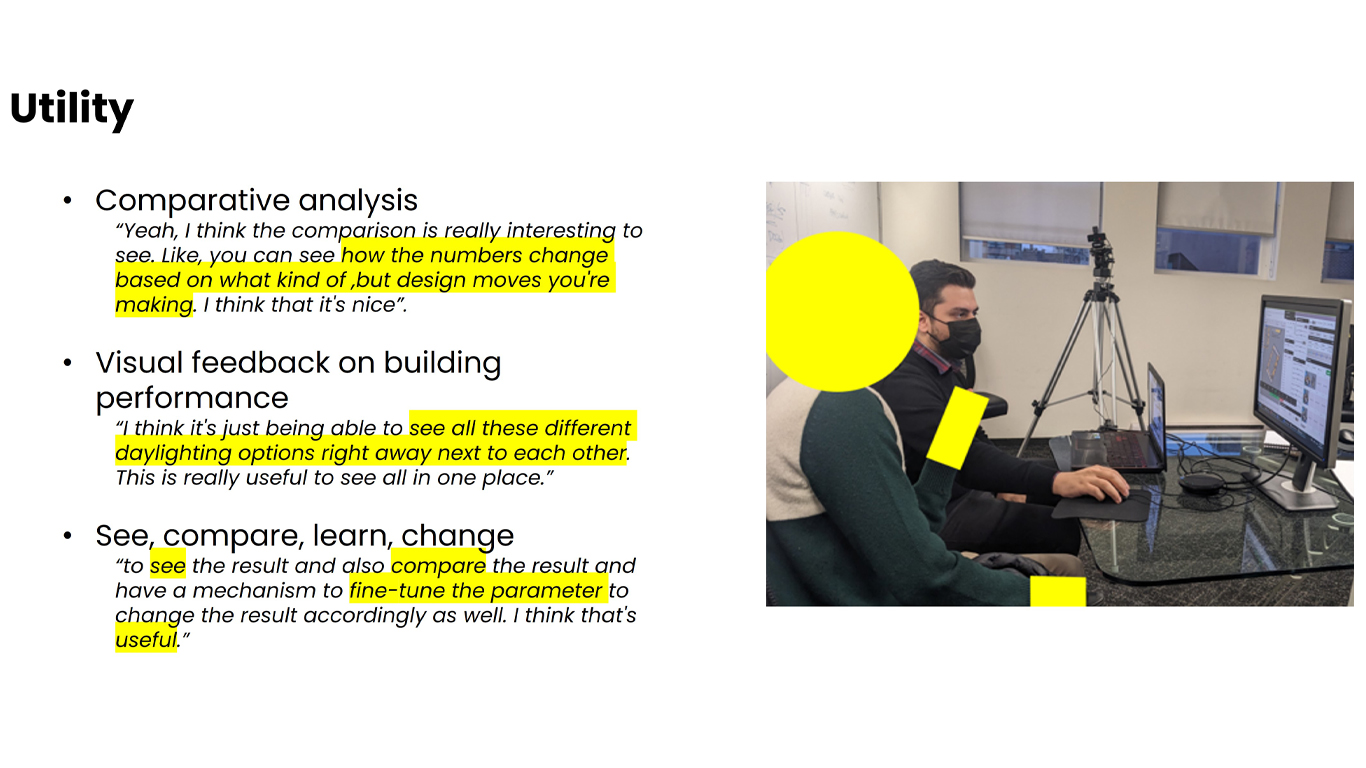
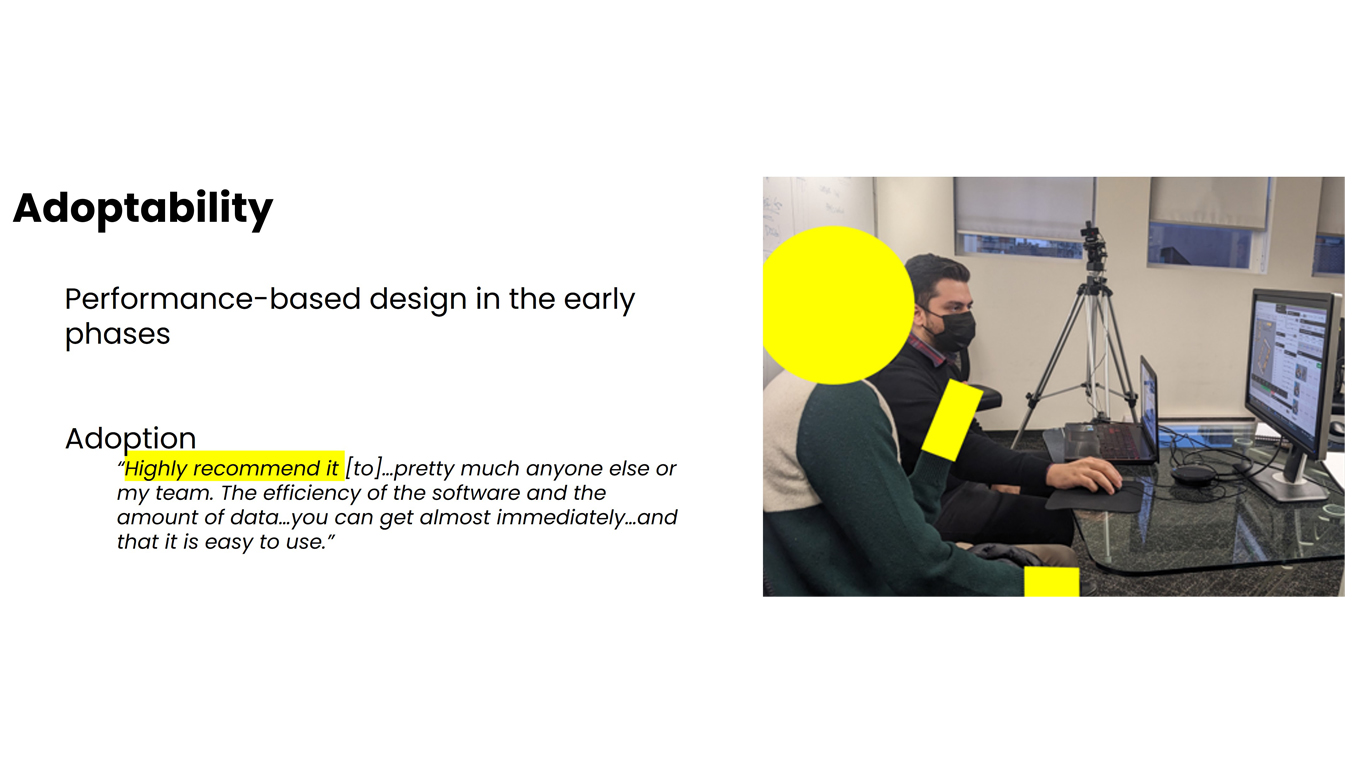
To evaluate the utility, usability, and adoptability of the interface during the development process we conducted a formative expert review to collect feedback and comments to refine the requirements and prototype. We recruited 7 expert architects with more than 5 years of experience from our industry partner.
Research Presentation and Dissemination
Explore how D-Predict bridges generative design, machine learning, and architectural practice. Watch a comprehensive demonstration of the tool and access the latest research publications that highlight its development, methodology, and real-world impact on early-stage building design.
Related Papers
-
Integrating Surrogate Modeling and Design Analytics for
Data-informed Exploration in the Early Phases of Building
Design
[PDF]
Esmaeil Mottaghi, Halil Erhan, Ahmed M Abuzuraiq, Victor Okhoya, Spyridon Ampanavos, Marcelo Bernal, Cheney Chen, Yehia Madkour, eCAADe 2024 -
D-PREDICT: INTEGRATING GENERATIVE DESIGN AND SURROGATE
MODELLING WITH DESIGN ANALYTICS
[PDF]
Esmaeil Mottaghi, Ahmed M Abuzuraiq, Halil Erhan, CAADRIA 2024 -
Integrating generative design and surrogate modeling for
data-informed exploration in the early phases of building
design
[PDF]
Esmaeil Mottaghi
Publication date: 2024/8/22
Source: https://summit.sfu.ca/item/39082
Institution: M.Sc. Thesis, Simon Fraser University